Marriage Equality is a Health Issue!

In recent years, many health profession organizations have issued policy statements in support of marriage equality, including the American Academy of Nursing, the American gay-marriagePsychiatric Association, the American Medical Association, the American Academy of Pediatrics, and the American Psychological Association.  Their support for marriage equality has been a response to growing social acceptance of same-sex marriage, but also has been a major factor in affirming the fact that committed relationships, and including the legal/social recognition of these relationships in the form of marriage, has important health benefits.
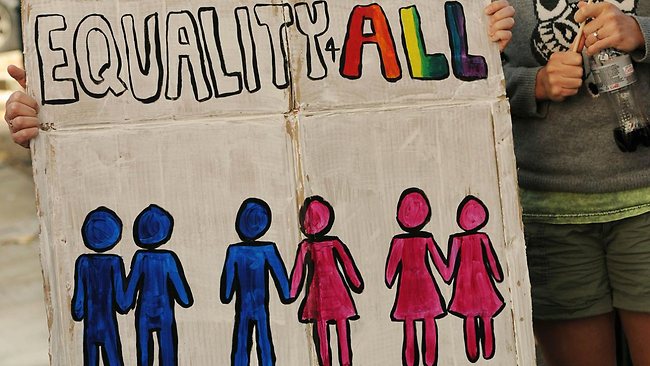
I for one have always had misgivings about the institution of marriage as we know it, primarily because of the fact that it is grounded in heteronormativity that perpetrate gender roles and gender stereotypes, and because of the close ties to religious views and beliefs that have not been kind to LGBTQ people.  But despite these drawbacks, the fact remains that many LGBTQ people have sustained committed relationships for years, even decades, and have benefited from many of the health-related benefits that come from intimate, sustained daily connections that provide support, love, and nurturance that contribute to health and well-being. Of course no long-term relationship is without its challenges and problems!  But for LGBTQ people who have sustained these relationships in a social context of disapproval and denial of their relationships, the challenges have been multiplied many times over!

Now that the majority of LGBTQ people in the United States, and all in several other countries, live where their committed relationships can be openly and legally recognized, some of the challenges and stressors around same-sex relationships have gradually being lifted.  While it is true that even in northern California, on of the most liberal geographic areas in the world, we still approach every public encounter wondering if our relationship will be accepted, gradually the reality is coming through that we can now enjoy the same kinds of social acceptance that many heterosexual couples have enjoyed for their entire lives.

As a recent article in Psychiatry Advisor notes: “multiple studies have found that psychosocial stress associated with having a lesbian, gay, bisexual, or transgender identity is implicated in the increased rate of mental health disorders found in LGBT persons. This stress comprises discrimination, concealment of sexual identity, and internalized negative attitudes about sexual or gender identity. Other studies more specific to marriage bans report that lesbians and gay men living in states where such bans were implemented had increased rates of mood and anxiety disorders, compared with lesbians and gay men living in states without constitutional amendments.”

The social, psychological and physical benefits of marriage equality have yet to be fully researched and documented, and much of the evidence to date is anecdotal. But now that more and more couples are emboldened to be “out,” the research evidence is mounting that the social/legal recognition of same-sex relationships does provide a substantial degree of mental health protection and resilience – health benefits that are vital to the well-being of LGBTQ people, couples and families.

Here at LavenderHealth.org, we will report on reearch findings along this line from time to time, and will include in our resources information related to this important issue.  So watch this space!  We welcome your comments, and if you have information to share with us at any time, let us know!
Posted in LGBT Health, Marriage Equality | Leave a comment

I Am Joe’s Man Gland (Revised): Prostate Health for Queer Men

Readers of a certain age will recall that present in almost every physician’s office from the 1950s to 1980s were back issues of the monthly Reader’s Digest, a compendium of condensed literature and non-fiction, including a semi-regular feature on human anatomy and physiology, “I Am Joe’s ___” or “I Am Jane’s ___,” with the relevant body part or system filling in the blank.

It’s time to update the tactfully euphemistic “I Am Joe’s Man Gland” for a queer male readership, particularly because the prostate occupies a special place in men’s sexual lore and practice.

Nestled between the rectum and the bladder, this walnut-size organ produces the fluid that carries sperm (produced in the testes), and its smooth muscles squeeze during orgasm to ejaculate the seminal fluid.

Infamously, the prostate is also susceptible to cancer, but typically it is a slow-growing cancer. Most men, if they live long enough, will develop a prostate cancer that is usually managed with watchful waiting. We usually die from other conditions.

Bad news and good news for gay men: While according to one 2011 study gay men are twice as likely to be diagnosed with cancer, we are significantly less likely to be diagnosed with prostate cancer (Boehmer, Miao, & Ozonoff, 2011).

Other prostate problems are more benign. A slightly enlarged prostate (known by the medical term benign prostatic hyperplasia, or BPH), normally accompanying aging, may cause some inconvenience. According to the National Library of Medicine’s Medline Plus:

Less than half of all men with BPH have symptoms of the disease. Symptoms may include:

  • Dribbling at the end of urinating

  • Inability to urinate (urinary retention)

  • Incomplete emptying of your bladder

  • Incontinence

  • Needing to urinate two or more times per night

  • Pain with urination or bloody urine (these may indicate infection)

  • Slowed or delayed start of the urinary stream

  • Straining to urinate

  • Strong and sudden urge to urinate

  • Weak urine stream (National Library of Medicine, 2013).

The wise patient, however, will bring up these symptoms with his primary care provider in order to rule out other more serious problems.

Prostatitis, an inflammation of the prostate, may be the product of an infection or other cause and is usually temporary. Some men find prostate massage a source of sexual pleasure. Whether it can also bestow a health benefit for men with chronic prostatitis is still not clear; Shoskes and Zeitlin (1999) found a benefit to a combine antibiotic and massage therapy, but more recently Ateya et al. (2005) could not find a significantly improved response and recommended antibiotics only. Prostate massage, moreover, may entail some risk if done too vigorously, and one risks tearing the delicate wall of the rectum.

A variety of anal probes designed to stimulate the prostate are commercially available as sex toys. Paradoxically, product web sites consulted for this article all provided disclaimers waiving the manufacturers from liability from harm in their use, with one announcing “not for internal use.”

Harvard Medical School (2011) provides advice on exercise and diet for prostate health, with benefits for cancer and prostatitis risk reduction.

In addition, some women and men find helpful exercises to strengthen the pelvic floor muscles,  the so-called Kegel exercises, both to strengthen urinary continence and for sexual pleasure (Mayo, 2012).

In conclusion, remember: A healthy prostate is a happy prostate.

References

Ateya, A., et al. (2005). Evaluation of prostatic massage in treatment of chronic prostatitis. Urology, 67, 674-678. doi:10.1016/j.urology.2005.10.021

Boehmer, U., Miao, X., & Ozonoff, A. (2011). Cancer survivorship and sexual orientation. Cancer, 117, 3796-3804.

Harvard Medical School. (2011, October 4). 10 diet & exercise tips for prostate health. Harvard Health Publications. http://www.health.harvard.edu/healthbeat/10-diet-and-exercise-tips-for-prostate-health

Mayo Clinic. (2012, September 25). Kegel exercises for men can help improve bladder control and possibly improve sexual performance: Here’s a guide to doing Kegel exercises correctly. Healthy Lifestyle: Men’s health. http://www.mayoclinic.org/kegel-exercises-for-men/ART-20045074?p=1

National Library of Medicine. (2013). Enlarged prostate. Medline Plus. http://www.nlm.nih.gov/medlineplus/ency/article/000381.htm

Shoskes, D. A., & Zeitlin, S. I. (1999). Use of prostatic massage in combination with antibiotics in the treatment of chronic prostatitis. Prostate Cancer and Prostatic Diseases, 2(3), 159-162. doi:10.1038/sj.pcan.4500308

Posted in LGBT Health | 1 Comment

3 more days to enroll!

February 15th is coming soon – the deadline to enroll in a health care plan of your choice!  Where-to-Start-What-to-Ask-coverIf you or someone you know is not yet covered, get the information and the help you need to make sure this happens!  Medical coverage for LGBTQ people and our families is important as never before — because now it can happen!  Visit the Strong Families web site today for specific information about LGBTQ coverage – do it now!

Posted in Join the discussion | Leave a comment

LGBTQ Valentines?

Valentine’s day, another one of our many commercially-driven “holidays,” is a bastion of heteronormativity.  The origins of the holiday are not known, but one version of the history claims that St. Valentine, who secretly performed marriages in opposition to the valentineRoman Emperor Claudius II, who outlawed marriage for soldiers because he believed that single men made better soliders than married men. Another version claims that it evolved as a Christian substitute for the popular pagan celebration of the fertility festival of Lupercalia, celebrated on the ides of February.  Regardless of its origin, it unquestionably assumes heterosexual romantic love – a message that sows seeds of doubt and shame for even young children who know that they feel physical and emotional feelings for someone who is the same gender or sex.

So there are two health issues here that deserve serious consideration: the damage that is heaped on LGBTQ kids and adults who are not only struggling with challenges of relationships and intimacy, but the undeniably painful challenge of going against a powerful social construct of heteronormativity.  The other health issue is the distortions that the heteronormative romantic ideal  imposes on all intimate and mutually nurturing relationships.  This romantic ideal obscures the real meaning, significance and experience of  the the kinds of human love, support and intimacy that are essential for health.

Nevertheless, most of us live in a world that celebrates this holiday, and in addition to raising these important issues that effect LGBTQ people, we also have the option of using this occasion to bring LGBTQ love into the open!   So if you are so inclined, instead of decorating your work space with typical red hearts, find an LGBTQ valentine symbol to decorate whatever space you can!  Here are a couple sources to consider:

Buzzfeed – 20 Adorable LGBT-Themed Valentines

Revel and Riot

And go out and have a party with your LGBT friends, decked out in LGBTQ valentine gear!  You ask what that is?? Make it up, and send us photos!

Posted in Holidays, Humor | Tagged , | Leave a comment

70 Research Studies confirm: Gay Parenting Does Not Harm Kids

A landmark online research portal focusing on LGBT Equality at Columbia Law School “What we Know” has just launched with its first report on what scholarly research says about the children of gay or lesbian parents.  The results are stunning – they reviewed 73What_We_Know_Blog___About recent studies that examined the well-being of gay or lesbian children.  A total of 70 of the studies concluded that children of gay or lesbian parents fare no worse than other children.  Three of the studies conclude that they face added disadvantages.  Visit the “What we Know” web site to see the details, where there are links to the abstracts of all the studies as well as to the sources where each article can be found.

The project they are working on next is equally important – “What does the scholarly research say about the impact of conversion therapy on LGB people?”  Visit their site for more information about the project

Posted in Join the discussion | Leave a comment