Safe Spaces for Women: Michfest as Exemplar

photo(1)This post was authored by Charlynn Odahl-Ruan who is a doctoral student in the Department of Psychology at DePaul University.

Immersed in the demands and expectations of our patriarchal culture, I sometimes forget to question how this onslaught impacts me or how it might feel to be in a truly women-only space.  I stumbled across such a space last August when I attended the Michigan Womyn’s Music Festival (MichFest) to conduct research. I had heard about Michfest through a friend whose partner was a long-time attendee. I study feminism and empowerment and the festival offered a chance get the perspective of women from diverse ages and backgrounds. I was excited for the chance to interview these women for my research but I had not anticipated how moved I would be by the healing impact of a space designed for women, by women.

MichFest began in 1976 and takes place in the woods of Michigan each summer, filled with music, camping, workshops, and ceremonies. The festival was the U.S’s first women’s music festival and one of the first large showcases for openly lesbian artists, who were mostly operating outside of the mainstream music industry. The majority of attendee identifies as lesbian, but the festival advertises as open to all women-born women. MichFest typically draws several thousand women each year and in the early 80s, reached 8,000 attendees. Most attendees camp in tents, but some come in fancy RVs.

At the festival last year, my colleague and I interviewed 19 women who shared their experiences of empowerment. I expected to hear well-spoken and thoughtful narratives on empowerment and feminism, which I did, but I was surprised about how often I heard about the power of the festival experience as part of healing. The words “dropping my armor” were repeated often. Women talked about adopting a protective tough exterior in the world. But, when they were out of the male gaze and free from patriarchal norms, they were able to let this armor fall away and experiment with more sensual, feminine, or vulnerable aspects of their identity. There was sense of safety in being in a space with thousands of other women, often walking around the woods in various modes of undress. Little girls would run through the fields during concerts in nothing but angel wings or boots and their mothers could relax knowing that their children were lovingly watched over by all the women and that they were safe from male predators. This feeling of freedom is so rare for women that I think we don’t even realize how heavy our protective armor has become.

I resonated with the younger women who expressed a greater sense of body acceptance born from seeing older women of all shapes accepting their own bodies. So rarely are we around women openly accepting and loving their appearance.   This safety and openness at the festival gave the women space to reflect and heal wounds they had suffered in a patriarchal culture. Several women shared stories of survivors of sexual trauma who had come to the festival to heal. The women spoke of having to put the armor back on when they left the festival, but they felt the festival week had given them the strength to make it another year.

Though I came to festival for mostly academic reasons, I learned about the power of safe spaces for women and I found myself reflecting more critically on the impact living in a culture that isn’t safe — physically or psychologically — for women. The women fondly spoke of the festival as being utterly unique to any other setting. I agree with them and found MichFest to be unlike any other setting I had been in. It was a week spent surrounded by women celebrating themselves (ourselves), embracing their power (our power), and building lasting community. The experience caused me to reflect on where I found safe places in my life where I could live without the demands of patriarchal norms. Sadly, those spaces are few. Such safe places need to be cultivated because, like for the women of MichFest said, this is where we find healing, self-acceptance, and growth.

Posted in Join the discussion | Tagged , , , , , , , | 3 Comments

Should Gay Men Take Preventive HIV Medications?

A recent recommendation by the World Health Organization (WHO) was announced in mass media with headlines like “WHO Says All Gay Men Should Consider Taking Antitretroviral Drugs,” “Healthy Gay Men Urged to Take HIV Drugs,” and “The WHO Wants All Gay Men to Take HIV Prevention Medication.” So called pre-exposure prophylaxis or PrEP involves a daily regimen of a single pill combining two medications (marketed in the U.S. as Truvada).

These headlines are misleading and confusing, and the premise is questionable and troubling.

First, WHO does not use the word “gay” in its announcements of this recommendation: http://www.who.int/mediacentre/factsheets/fs360/en/ Instead, the more technically precise terminology “men who have sex with men” or MSM (along with other people at risk) is used. To non-experts this may seem like a distinction without a difference, but it points to a global problem with the stigmatization of male homosexual behavior and identity (even among many groups in the U.S.). Many men who regularly have sex with men would not identify themselves as “gay.” Unlike self-identified “gay” men, who are often connected to sexual minority social networks, media, and education, MSM “living on the down low” may live secret sex lives that are impervious to sexual health education and resources.

Moreover, the media’s misuse of the convenient term “gay” further caricatures and stigmatizes gay men as unable to manage their sexual lives safely and responsibly. However, the first decade and a half of the AIDS epidemic (1981-1996) before the introduction antiretroviral pharmaceuticals show that this stereotype is inaccurate. Grassroots gay health movements provided alternatives in a range of risk-reduction strategies.

It is also questionable whether men engaging in stigmatized behavior will have access to or be inclined to seek a pharmaceutical regimen with only one purpose.

Then there is Truvada itself. When I visited the Truvada PrEP website, I was warned before I could enter: “The information on this site is intended for residents of the United States who are 18 years of age or older.” Whom this caution is protecting is unclear, but it suggests its problematic nature.

Taking Truvada poses a risk of a variety of serious health problems, including lactic acidosis, serious liver problems, complications with hepatitis B, complications with other medications, and serious side effects.

And then there is the cost. According to the New York State Department of Health, Truvada can cost $8,000 to $14,000 per year: http://www.health.ny.gov/publications/0265/ Inequities in insurance coverage (and the fact that insurers are often more inclined to pay to fix a problem than to prevent it) may make this option prohibitively expensive.

And can we talk about medication “compliance”? Patients notoriously fail to take medications as prescribed, either because of carelessness, economic considerations, or inconvenience. Will inconsistent use of PrEP place MSM at even greater risk?

Given that there are a variety of reasons that people engage in unsafe sexual practices — judgment compromised by alcohol or drugs, coercion, ignorance, calculation, denial, among others — the WHO proposal may seem like a responsible recommendation.

However, it seems to me to be an opportunity for renewed conversations and negotiations around concepts of responsible sexual behavior, consent, and risk reduction.

The answer isn’t in a little blue pill.

Posted in Join the discussion | 2 Comments

The “Rainbow” Letter

Rainbow-LetterSTIGMA — Take a moment to think about that word. What does it mean to you? What does stigma look like?

To me, stigma happens when others devalue a person or a group of people based on a characteristic (e.g., trait, disease, behavior, etc.). According to the Oxford Dictionary, it is defined as a “mark of disgrace associated with a particular circumstance, quality, or person.” The word dates back to the 16th century when it referred to a mark made by pricking or branding.

Upon reflecting on the word stigma, I immediately think of a favorite classic book of mine, The Scarlet Letter. If you recall, the woman in the book (Hester) has to wear an “A” on her chest for committing adultery. She is shamed, shunned by the community, and isolates herself in a small cottage on the outskirts of town. The resemblance between Hester and LGBTQ individuals is uncanny. If an LGBTQ individual is open about their sexual orientation and/or gender identity, they are in essence wearing an “A” on their chest, a “Rainbow” letter.

It goes without arguing that LGBTQ individuals are stigmatized across the entire globe (some places obviously worse than others are). The consequences of stigma are atrocious in some parts of the world. Some countries sentence LGBTQ people to death, while others do not protect (and often promote) LGBTQ individuals from being attacked, humiliated, or discriminated against. Industrialized countries are not immune to this issue. There are still many areas in the U.S. where LGBTQ individuals are attacked and/or discriminated against. In fact, many laws and policies still discriminate against LGBTQ individuals and same-sex couples. These are the consequences of stigma surrounding LGBTQ – the consequences of wearing the Rainbow Letter. They are being stigmatized based simply on a trait/characteristic.

In The Scarlet Letter book, Hester had to isolate herself because the community shamed her. Reflect on the similarities between Hester and LGBTQ individuals. Imagine wearing your Rainbow Letter in an overly conservative area of the country, or in a homophobic household, or in an unsafe work environment. Just like Hester, LGBTQ individuals will often try to hide their sexual orientation and/or gender identity to avoid being shamed or they will isolate themselves. If their Rainbow Letter is showing, they risk being rejected by family and friends, being attacked, or being discriminated against. Other consequences include the inability to access high quality health care, income inequalities and employment discrimination, poor mental health and unhealthy behaviors, and psychological distress.

Of course, stigma is not the only cause of the consequences I just described; however, it is a major contributing factor for LGBTQ individuals. How should our society address stigma around LGBTQ? Rainbow Letters are here to stay and thus we need to focus on reducing stigma and reducing the effects of stigma. Our society has made tremendous strides in reducing stigma through advocacy, policy changes, more visibility of LGBTQ people in the media, etc. A compilation of all the work that has been done across society (e.g., communities, professions, schools, organizations, etc.) is responsible for the reduction in stigma around and acceptance of LGBTQ individuals.

Although a lot of great work is still being done to reduce stigma, it will remain in our society. Thus, we cannot forget to design solutions to reduce the effects of stigma. Examples include programming offered at LGBTQ centers, Gay Straight Alliances in the school system, and the “It Gets Better Project.” We need to continue to promote these types of programs, especially to youth and other individuals who are at risk because they proudly wear their Rainbow Letter.

As an emerging researcher, I constantly remind myself that it is stigma that has resulted in the health and health care disparities among LGBTQ individuals. Being gay does not inherently put me at risk; it is the stigma society has put on my sexual orientation. It affects every area of an LGBTQ person’s life. It is now up to everyone to reduce the stigma and to reduce the effects of stigma.

Posted in Join the discussion | 2 Comments

The matter of choice

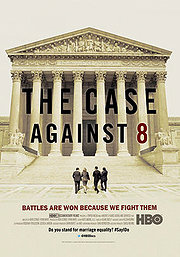
This past week I saw the new HBO documentary “The Case Against 8,” which was fascinating, and inspiring.  The film makers followed the case for over 5 years, filming interactions involving the lawyers and the plaintiffs as the process unfolded.

There was one particular scene that spoke to me quite powerfully.  It was plaintiff Sandy Stier’s response to a question asking her how she knew she is a lesbian.  She described the experience of falling in love with her partner Kris.  The person then asked if she thought she could change, or if she had a choice in the matter.  Sandy very thoughtfully prop8explained that the experience of falling in love with a woman gave her important information about herself, and that she did have a choice about what to do with that information.  However, she said emphatically, no, she cannot change the fact of who she is at her core.

This is a critical point that is important for the health and well being of all LGBTQ people and their families, particularly in the face of very frightening and dangerous efforts to impose “reparative therapy” on people who are struggling with sexual and gender identities.  The critical point is the distinction between acts and identity –  between a fundamental, unchangeable human trait (sexual identity), and behaviors or acts, which may or may not be expressive of a core human trait.

An excellent article by Jay Michaelson published in the Daily Beast titled Ten Reasons Women are Losing While Gays Keep Winning gives this distinction as the first of ten reasons for the success of the “gay rights movement.”  A turning point in the long LGBT  rights movement came when key human rights leaders began to turn away from arguments based on a “right to choose” sexual behavior/acts, and to frame the issue as a matter of discrimination against people based on their identity.

Of course, as Michaelson points out in his excellent article, it is still OK to discriminate against people based on their behavior (which is the core position of those who push reparative therapy), but it is not OK to discriminate based on based human traits —  ability/disability, race, and now increasingly the human trait of sexual and gender orientation/identity.

celebrate300So it is time to be very clear about this distinction, and to be aware of our own position in advocating for equality and rights for all LGBTQ people and families.  Behavior may be seen as choice, within certain limits of human freedom. But where there is a choice, the health is wholeness … having the inner peace that comes from actions, words and deeds being at one with one’s core identity/being. It still takes great courage for LGBTQ people to act in ways that are congruent with their true inner Self.  But even in the face of all the challenges, in many parts of the world there is reason to celebrate the growing arch of history that bends toward freedom and justice.


Posted in Activism, Join the discussion, LGBT Health, LGBTQ rights | Tagged , , | Leave a comment

Forgive a brief rant and rave…

I am sitting at Mel’s diner in foggy San Francisco doing paperwork over breakfast. In my bag, I have three articles that I have been pondering this week. Two are pending publication, work by faculty colleagues across the country. One is Fidelindo Lim’s original work. He surveyed nurse educators and the results showed how little education about LGBT issues is incorporated into the nursing curriculum. Nursing educators report knowing little about LGBT healthcare, and very few even read about these issues. Another article is by my San Francisco State colleague, Rebecca Carabez. She had undergraduate students interview practicing nurses and her findings show an astounding lack of education about LGBT issues in nursing school or continuing education even in the San Francisco Bay Area. One article is already published, by Patti Zuzelo (2014) and is a lovely piece of LGBT advocacy. She says,

“it may be that nurses…do not know or consider the unique and shared health care needs of LBT women in part because of curricular inattentiveness toward sexually marginalized groups that is experienced during formative years of professional education”

In considering these three articles as a whole, I was caught in the middle of conflicting emotions. I was grateful that my colleagues are doing this work and raising awareness of LGBT issues in nursing, and appreciative of the well-written, reasoned articles that plead for attention; but also furious that we still need to do this. Our polite calls for attention from nursing education and from nursing professional organizations have largely fallen on deaf ears for more than 30 years. On the one hand, we have come a long way, and now fewer LGBT people experience the most devastating types of discrimination and violence, such as refusals of care and physical mistreatment by healthcare providers. The number of nurses who are overtly negative about LGBT people has been shrinking (although is still robust enough to poison the climate in many settings). Now, LGBT people face more subtle issues of heterosexism. What Zuzelo is referring to in the quote above: “curricular inattentiveness.” In the past 30 years we have been careful to blame the system: the discourses of society such as religion, the media, education, medical and healthcare systems, the law. But this defense is getting old. LGBT people are in the media every day, laws are changing right and left, societal attitudes are changing, religions are becoming welcoming and inclusive. Nursing no longer has an excuse for not addressing LGBT issues in all aspects of the discipline: education, continuing education, practice, research, and policy.

Thank you Drs. Zuzelo, Lim, and Carabez, and many others for writing these rational and measured pleas for attention, but I’m about done with it all. I’m pissed off at the “curricular inattentiveness” because there is no longer any excuse for it. LGBT nurses and their allies are beginning to organize and maybe having a nursing section of GLMA: Health professionals advancing LGBT equality, will make a difference. Perhaps together we will find a way to become a force to reckon with; a force that nursing leadership must pay attention to at long last. If you are furious, discouraged, or inspired to make a change, come to the LGBT Nursing Summit September 10 and let’s find a way together! I am tired of getting indigestion every time we hit another brick wall in the hallowed halls of nursing.

In the meantime, for those with cooler heads, read the fine work of my calmer, less dyspeptic colleagues and share their work with nursing coworkers who need this information, whether they know it or not. I will alert you when the two unpublished articles are out in print. You can find a link to the Zuzelo article on the home page of this website.

Posted in Curriculum, Education, Join the discussion, Nursing, Resources | Tagged , , | 5 Comments